buggs.io is made by Power Up Gaming, the same team that makes PowerUp. We built the engine for our own game first, and buggs.io still runs on the version you'd get. That makes it a useful Godot monetization case study, with one obvious caveat: we're not an independent customer. So this page sticks to what you can check. It says what's live in the game today, what's built into it but not switched on yet, and the rules we hold ourselves to.
Play buggs.io in your browser, get it on Google Play, or find it on itch.io.
The game
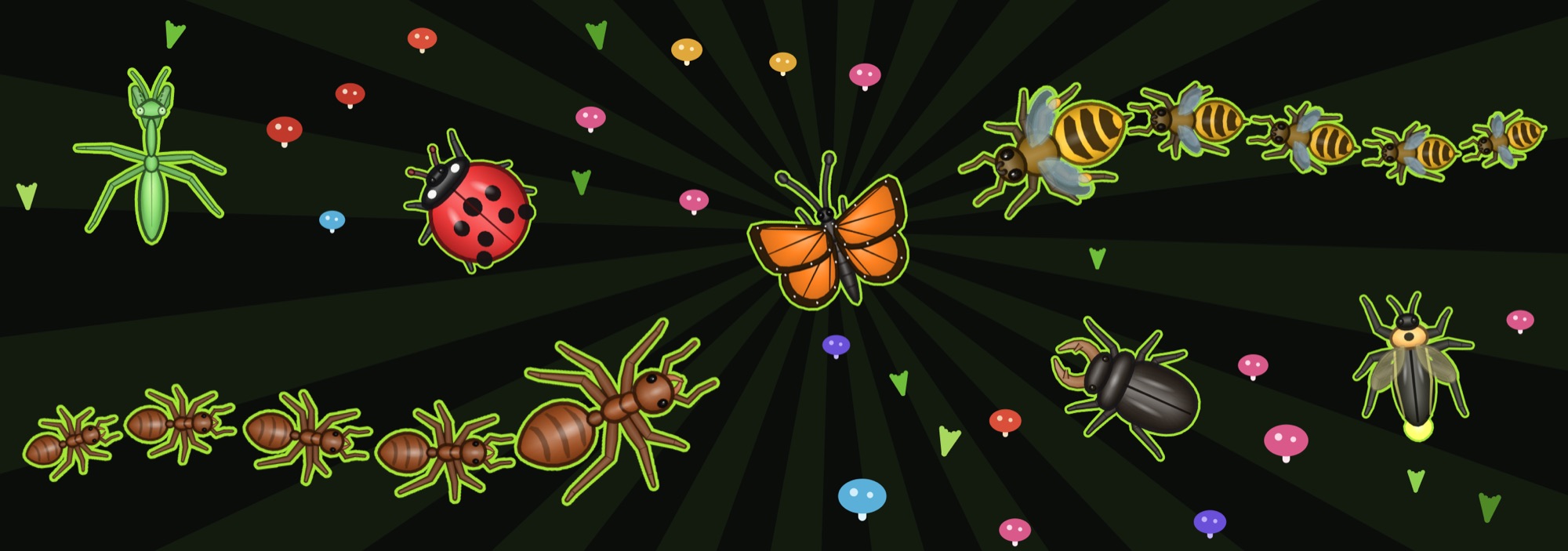
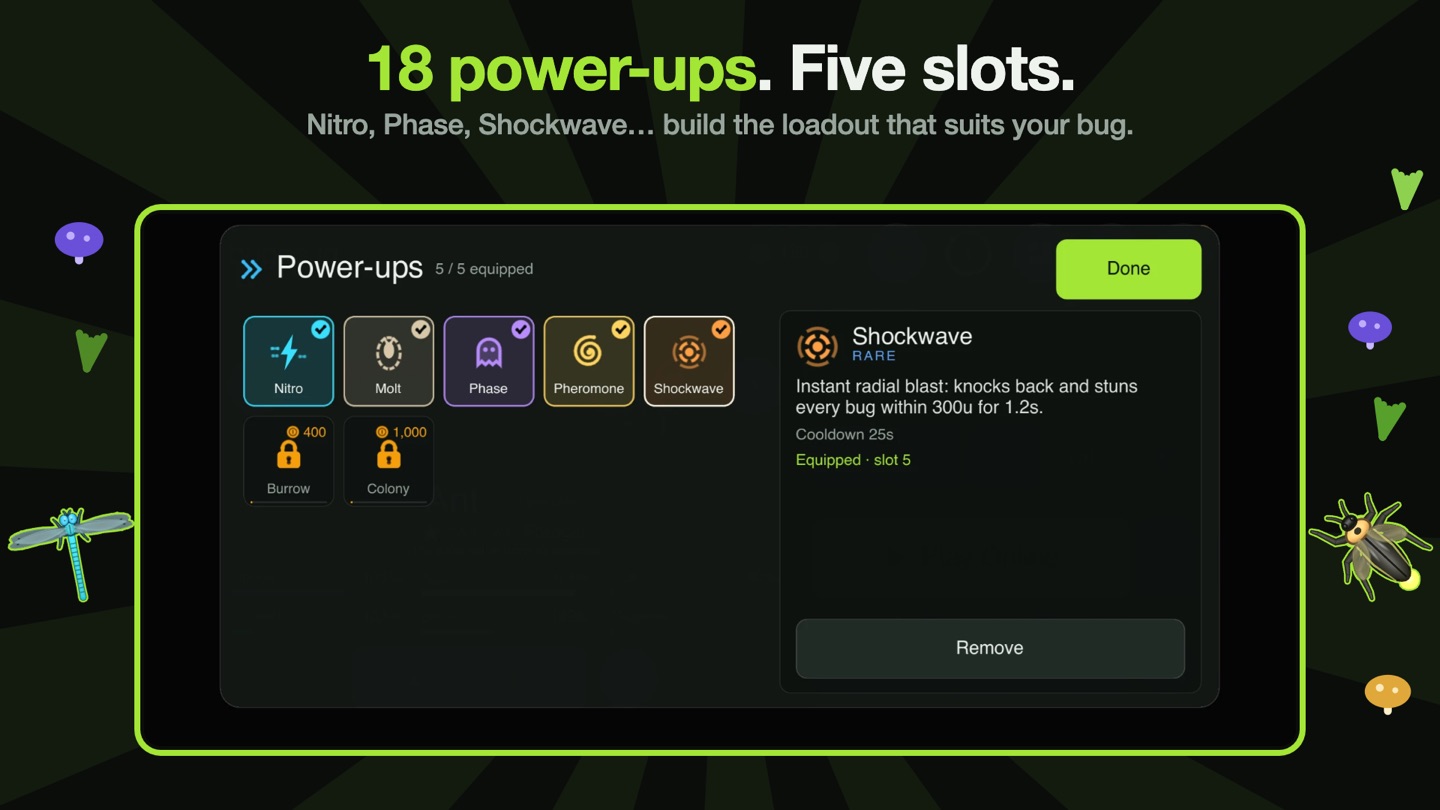
buggs.io is our multiplayer .io game. You play a bug that grows as it eats, and you try to cut the other bugs off. It has 33 bugs, 18 power-ups, weather that shakes up the arena, and bots that keep every room full.
| Where it plays | Status |
|---|---|
| Web, at buggs.io/play, on desktop and phone | Live |
| Google Play, on Android | Live |
| itch.io, a listing that opens the browser version | Live |
| iPhone | Coming soon |
The stack is small: a Godot 4.7 client, a Node game server, and PowerUp. The client talks to PowerUp through the Godot addon. The game server does one job for PowerUp: after each online match, it reports how the match went.
What runs on PowerUp today
These are live in buggs.io now, set up and published from the PowerUp console.
The store and the coin wallet
Players earn coins from online matches and spend them in the store. Every coin is written down when it's earned or spent, so a balance always has a history behind it and support can see exactly what happened. What a match pays is set in the console and capped per match and per day. Read more about coins and the in-game shop.
The item collection and its unlock rules
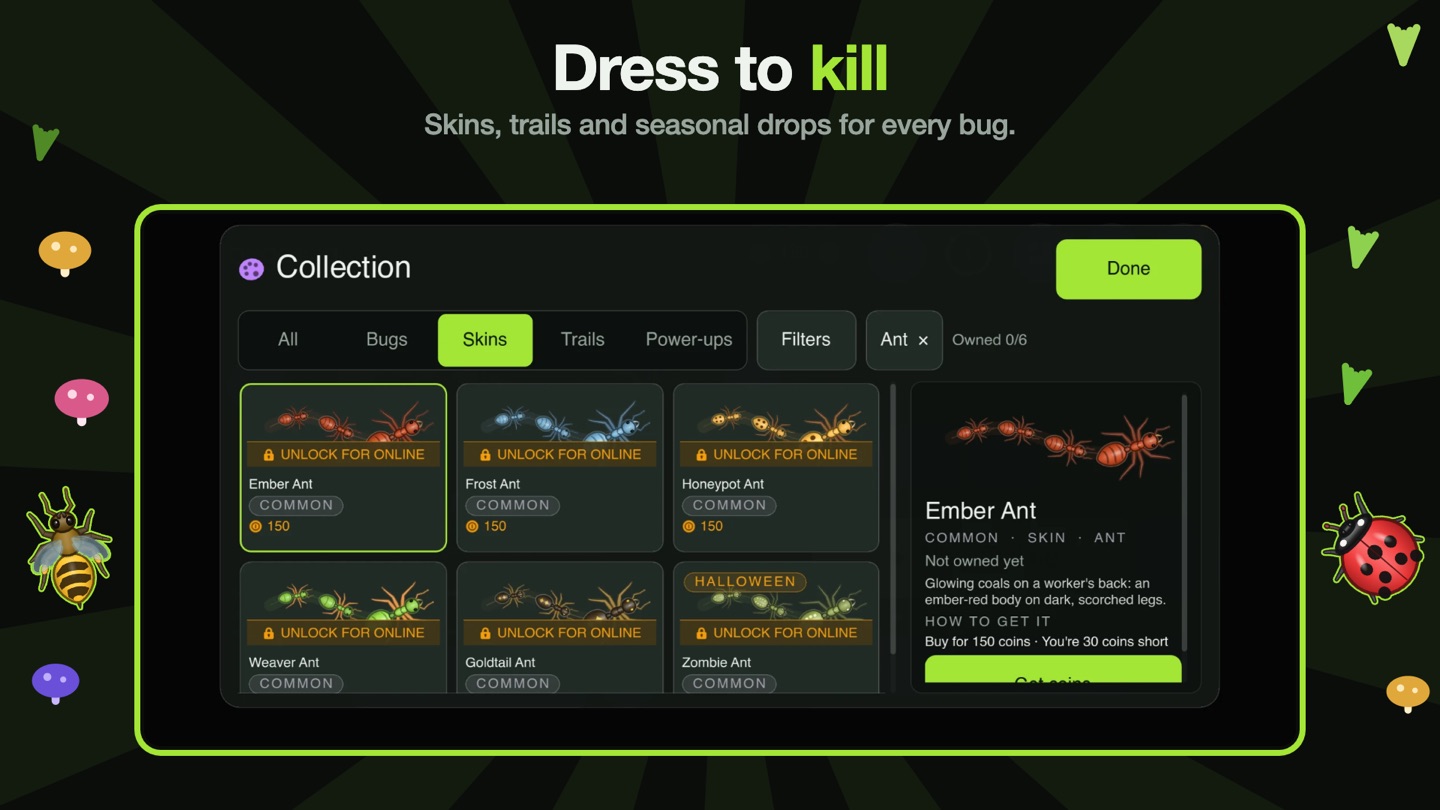
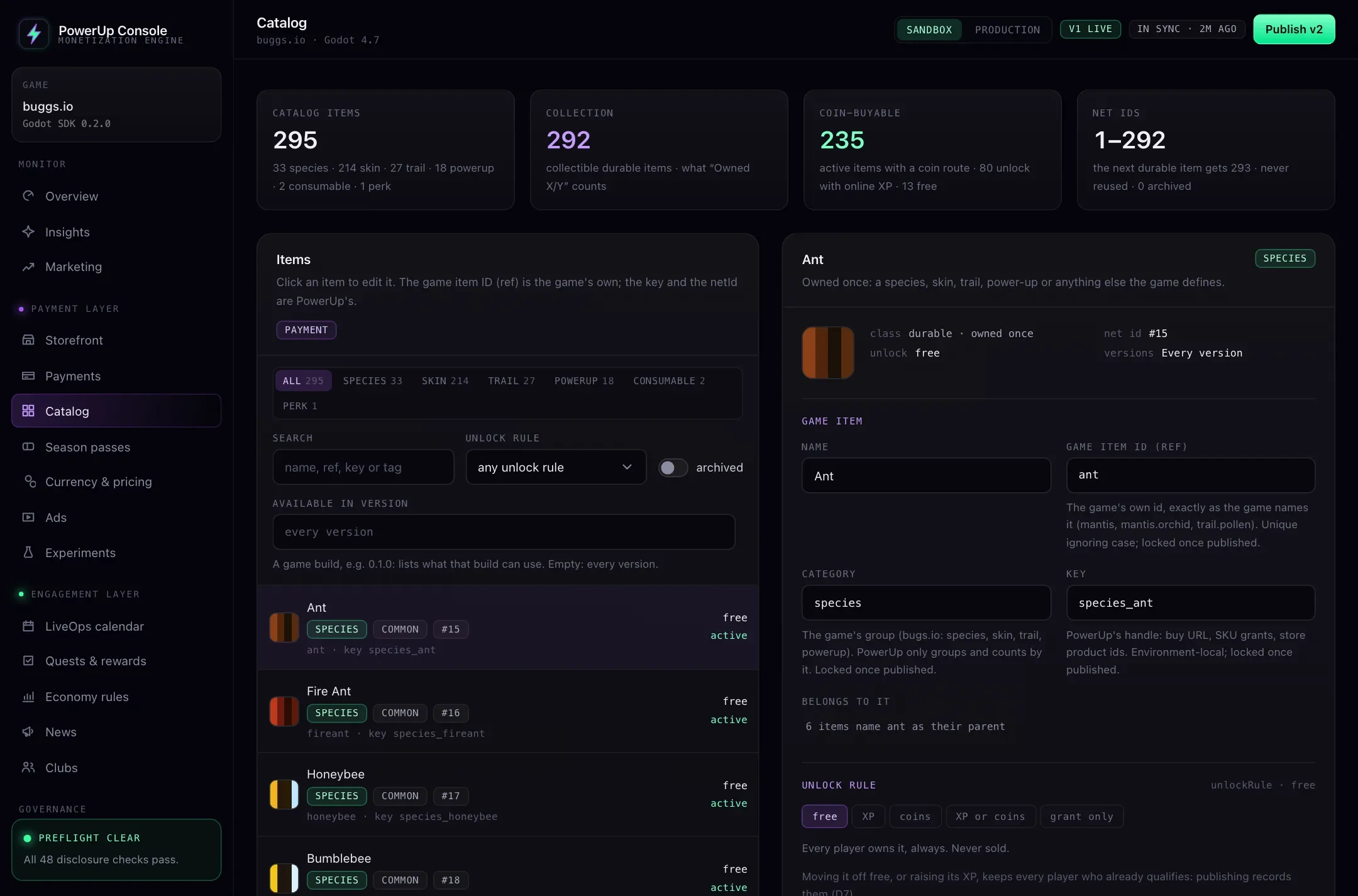
buggs.io has over 250 bugs, power-ups, skins and trails, and each one has its own way to unlock it. Some are free, some take XP, some take coins, and many can be had either way. The item list comes from the game's own catalog export, so the Godot project stays the source of what exists.
Items are matched to the game versions that can show them. When we add a new bug, players on an older build aren't offered it, and anything they own that their build can't draw comes marked as needing an update instead of breaking the screen.
Online progress from match reports
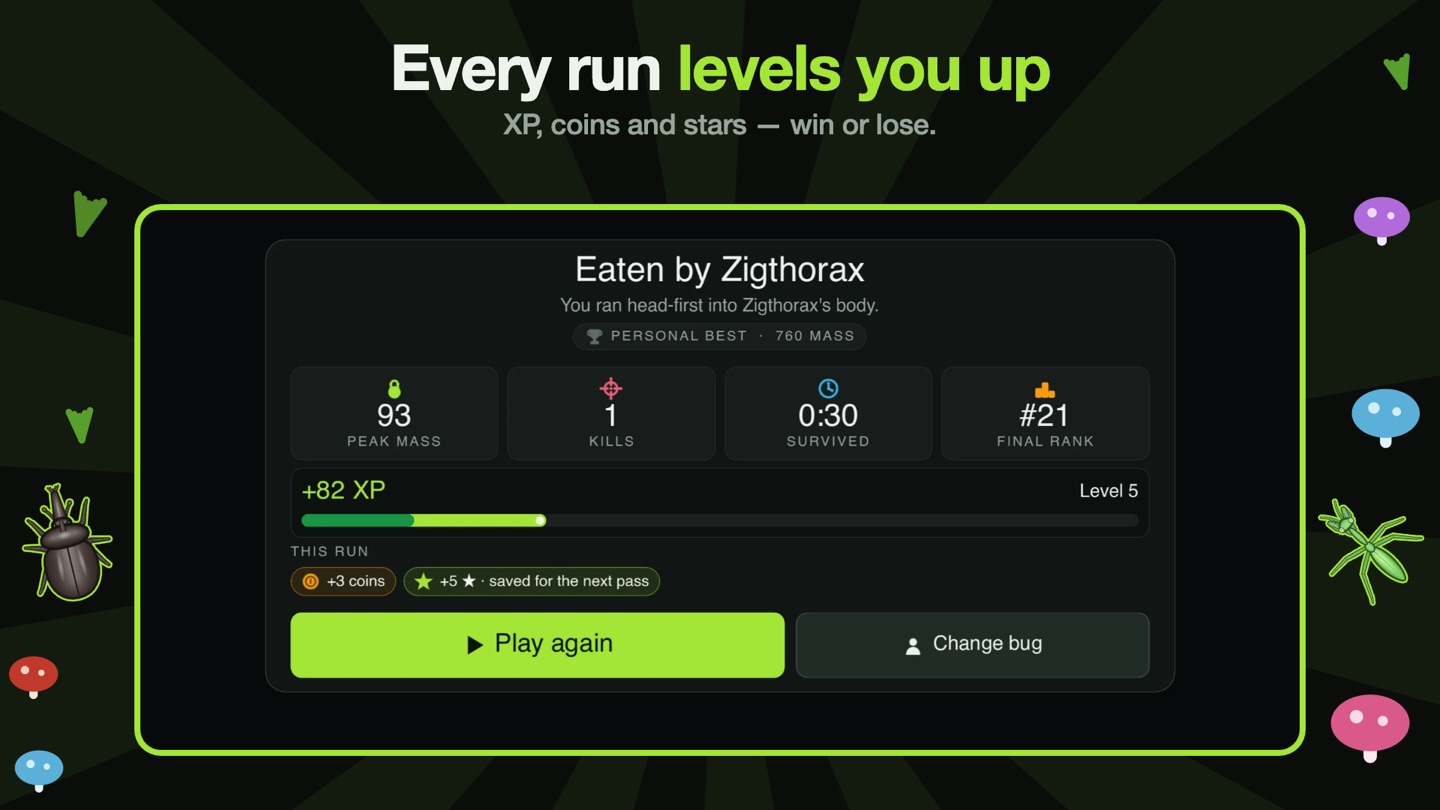
XP and match rewards only come from real online matches. When one ends, our game server reports it to PowerUp, and PowerUp adds the XP, the coins and the player's records. The client can read its progress but can't write it, so a modified client can't add XP and nobody can buy it. Offline matches don't earn anything, so there's nothing to farm offline.
PowerUp keeps the totals. The game turns them into levels and mastery with its own curves, so how buggs.io levels up stays a game design decision.
Accounts without email
Players move to a new device with a short code instead of an email address. buggs.io doesn't need an email or any other personal details to keep an account, and deleting one takes a single call.
Built in, not switched on yet
The rest of the engine is already built into the buggs.io client and waiting for us to switch it on in the console:
- Stripe, Google Play and App Store checkout
- paid boosts
- the season pass
- quests and events
- the news inbox
- clubs and their weekly tournament
- rewarded ads
When we switch one on, it goes through the same publish checks as any other change. Until then they're engine features you can see on the demo: we walk through them in the console on buggs.io's sandbox setup.
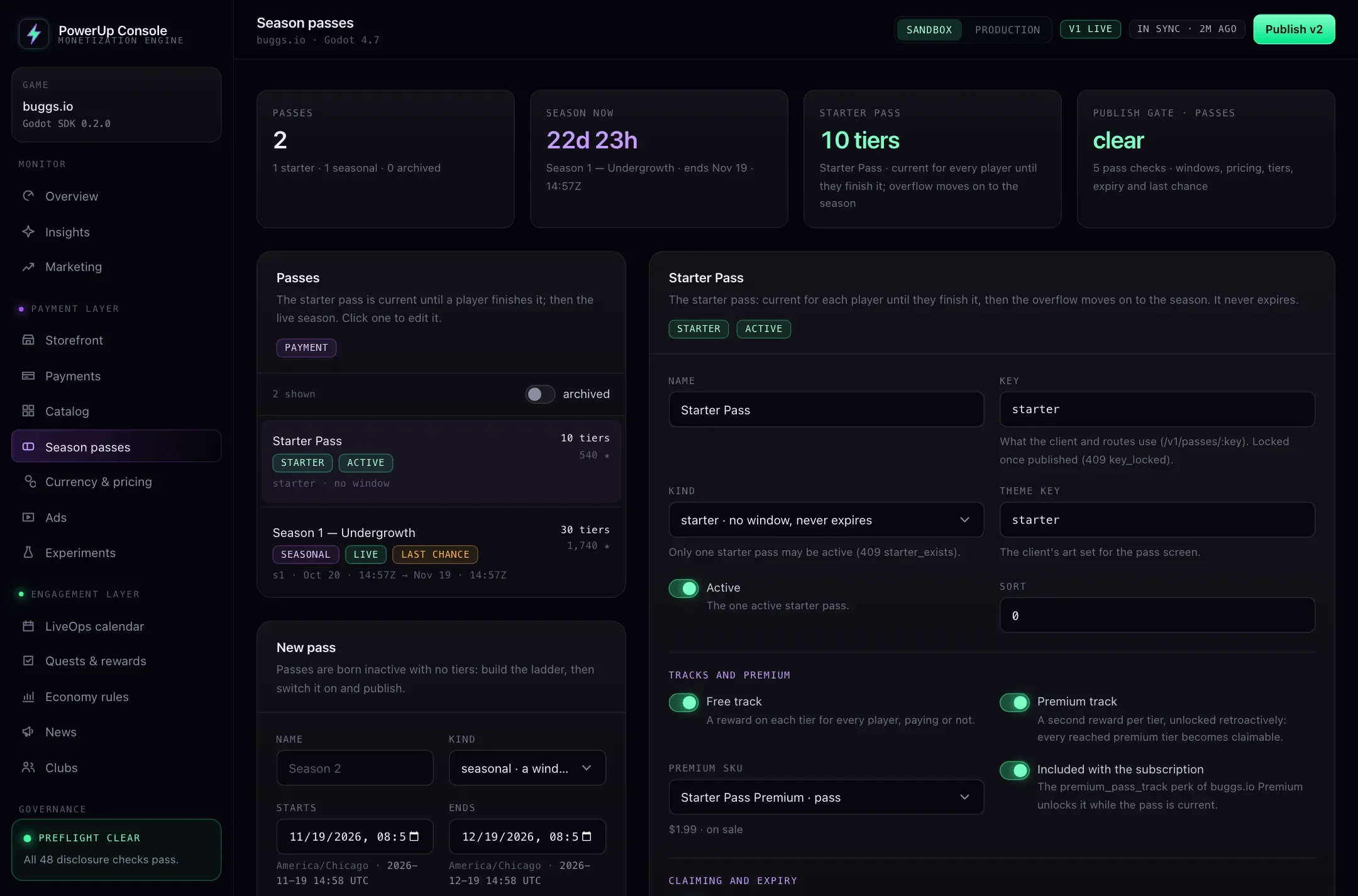
Building for one game first has a catch: it's easy to bake that game's rules into the engine. Boosts are the clearest example. They started as buggs.io's three: Start Big, which spawns you with more mass, Revive, which brings you back after a death, and Boost Cubes, which a player activates in the arena with coins. Since October 27, 2026, any game defines its own boosts, with a name, when they apply and their limits, and buggs.io's three are just its data.
How we run buggs.io
A store that players trust takes some rules. These are ours, and a few of them, such as no ads for a player whose age isn't known, are the engine's defaults for every game.
- Nothing you pay for is random. There are no paid loot boxes.
- Power-up charges, cooldowns and loadout slots are never for sale.
- Every power-up can be earned with XP. None of them is coins-only.
- Offline matches don't earn anything, so nobody can farm progress.
- We ask your age before any purchase or ad. No age, no ads.
- If PowerUp is ever down, you can still play.
If you're planning your own setup, the Godot monetization overview covers each piece, and remote config explains how a change goes from draft to live.
See it for yourself
Play buggs.io and look at the store and the collection. Then book a demo and we'll show you the same game from the other side, in the console, including the parts that aren't switched on yet. See pricing for the plans.